


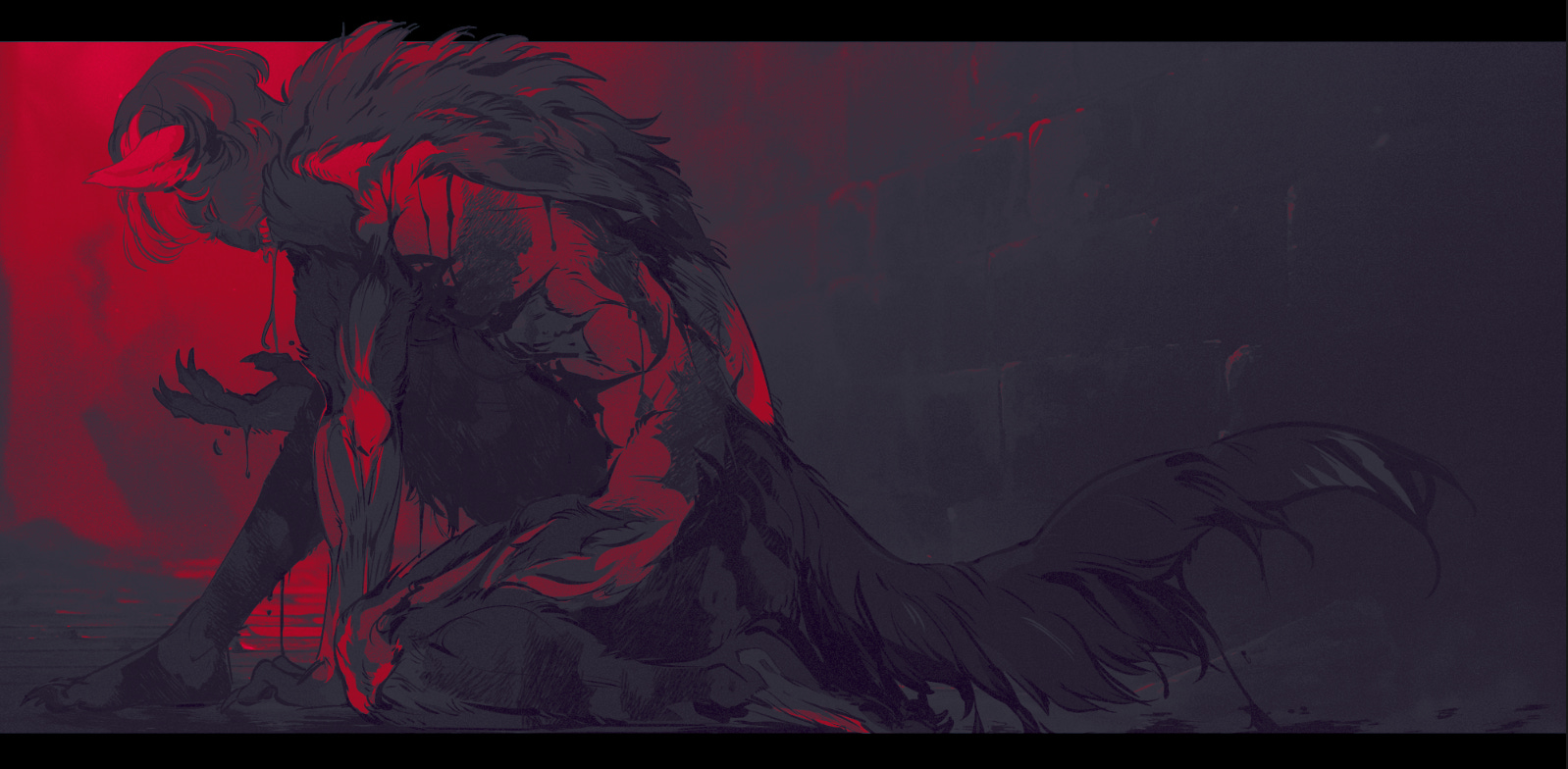
Heath Ledger. Anthony Hopkins. Javier Bardem. Christoph Waltz.
We (rightfully) celebrate actors who disappear into villains. We call it transformative. We give them statues for it with standing ovation. We write retrospectives about the psychological toll of this craft, of method acting, and we mean it as praise.
A writer—guess who writes scripts—renders the same interiority on the page and someone asks if they’re okay. If perhaps someone should check their hard drive.
The method is identical. The psychological labour is the same. One is called skill. The other is treated as though it’s confession.
I’ve seen a few quite funny Tiktoks satirising the absurdity of accusing authors of simply writing themselves, no fluff, into their books confession-style. And thank goodness for that or I would have even less hope for the media-literacy of young people than I do at the moment.
But the double standard isn’t the (only) real problem. The real problem is what this suspicion assumes—and what it costs when we indulge it.
First principles first.
Stories do not exist to teach lessons. They are not public utilities requiring justification. They do not answer to your anxiety about what their existence might imply.
Humans painted on cave walls before we had written language. We told stories around fires before we had agriculture, cities, or any framework at all for asking whether a story was allowed to exist. The impulse to represent experience—even dark experience—precedes civilisation. It precedes ethics. It precedes the entire apparatus of moral licensing that contemporary critics want to impose.
Fiction exists because we are fiction-making animals. Full stop. No “because it teaches us.” No “because it serves social good.” No “because it makes us better people.” The making is the thing. Everything else is secondary.
Entertainment. Beauty. Aesthetic immersion. The pleasure of a well-turned sentence or a character who breathes. These are not lesser purposes requiring defense. They are not the sugar coating on the nutritious medicine of Moral Instruction. They are why stories exist in the first place.
The teaching, when it happens and often does, is emergent. A byproduct of honest rendering, not a price of admission.
A story about darkness does not owe you an explanation for its existence. It does not need to demonstrate social utility before some imaginary tribunal. It is not required to make you comfortable, and it is certainly not required to preemptively defend itself against your suspicion that the author might be the thing they’ve depicted.
Fiction is not applying for a permit. It does not need your approval to merely exist.
But let us address the suspicion directly, since it’s not going away on its own.
The assumption beneath it: that fiction is autobiography. That what a writer depicts, they endorse—or worse, enact. That the only reason someone could render a convincing villain is personal experience with villainy. That darkness on the page is darkness in the soul, and the more convincing the darkness, the more contaminated the writer.
This is a reading comprehension failure. And it just loves to parade as moral stancing.
By this logic, Thomas Harris is a cannibal. Gillian Flynn a sociopath. Cormac McCarthy should be investigated for No Country for Old Men. Vladimir Nabokov should have been imprisoned the moment Lolita saw print. The absurdity is obvious when you list it out. The authors we canonise have rendered some of the most disturbing interiority in literary history, and we don’t assume they’ve lived it. We assume they’re skilled.
Or, perhaps, they’re not being read by the demographic who is out there reading Heated Rivalry or whatever slop. Perhaps, if they were being read, then perhaps that type of reader would make those assertions. Truly, I would no longer be surprised.
The assumption is applied selectively. Not to the established pantheon—they’ve accumulated enough cultural armour to deflect it. McCarthy doesn’t field serious questions about whether he’s murdered anyone. Nabokov is studied in universities rather than investigated by authorities. The grandfather clauses are firmly in place.
The suspicion lands elsewhere. On newer writers. Less established voices. On anyone who hasn't yet accumulated the fanbase or credibility to make the questions stop. The same rendering that earns one author a National Book Award earns another a concerned Tumblr post asking why they’d want to write something like that.
Which tells you everything about what the suspicion actually is. It’s not a principled thing. If it were principled, the canon would be in prison. It’s a weapon—deployed against those who haven’t yet accumulated enough status to be beyond reproach.
I’ve been on the receiving end. You mention the project you’re working on. You describe the antagonist, or the themes, or simply the tone. And you watch someone’s expression change. The slight lean backward. The recalibration behind the eyes.
“Why would you even want to write something like that?”
Asked with the tone of someone backing slowly toward the exit.
As if the desire to render darkness is itself a symptom. As if the only reason to write a convincing monster is that you recognise something of yourself in it—and not in the way that all good characterisation requires recognition, but in the way that should concern the authorities.
The question is never asked of actors. No one asks Anthony Hopkins why he’d want to play Hannibal Lecter. The wanting is assumed to be professional. Artistic.
Writers get no such courtesy. Writers are invisible—at least until you need to send them a letter to call them daemonic. And because readers can’t see or perceive the performance, they assume there isn’t one at all.
Impossible Perfection
What the suspicion of writers wants, even if its holders won’t say it plainly, is for this to be true: For to depict darkness, that means you’re creating darkness. Inspiring it in the world. Where fiction is a kind of summoning ritual, and refusing to write about violence will make violence disappear. Where if we simply stop showing the ugly parts of human experience, those parts will wither from lack of attention.
This is magical thinking. The logic of a child who believes that closing their eyes makes the monster disappear, unable to see them.
Sex will not vanish because you refuse to depict it. Violence will not evaporate because you write around it. Cruelty, exploitation, the full catalogue of human capacity for harm—none of this was invented by storytellers. None of it requires fiction’s permission to exist. Darkness is not a narrative choice so much as a fact of the species.
The sanitisers imagine that humans are perfectible. That we are blank slates, and if we simply curate the inputs correctly, we’ll produce the right outputs. Perhaps that’s correct, to some degree, for the stupidest among us. They would have a world where no one needs to encounter difficult material because difficult material has been edited out of the feed. And in so doing, miraculously take the ideas out of people’s heads as if they need fiction to put them there in the first place.
Chicken and egg, situation. In this case, capacity for harm or fiction. What came first?
You cannot educate darkness out completely. You cannot curate it away. You cannot build a world so padded with safe content that humans stop being capable of harm.
Pretending otherwise doesn’t protect anyone and I would argue that it only makes them unprepared for the encounter when it comes.
So. Fiction doesn’t owe justification. The confession fallacy is illiterate. The sanitised utopia is a fantasy. You’re still with me, very nice.
Since the critics have decided to frame this as a question of harm—since they’ve claimed that dark fiction damages readers, culture, damages the fragile moral fabric of society. Let us take a closer look at that.
Let’s talk about what this argument destroys.
Because my argument—the argument that people are actually rather intelligent and, if you nurture their ability to draw their own conclusions without you attempting to manipulate their thoughts for them—are actually demonstrably capable of consuming fiction and understanding that it’s. Bloody. Fiction.
And it can be proven scientifically. Children as young as three-to-four years old can already discern a fantastical event from a real one.
Comprehending the thing is not the same as approving the thing. This should not need to be said, and yet here we are.
The entire project of psychological insight—in fiction, in history, in life—requires modeling how people arrive at conclusions you may find monstrous. Not to excuse them. To see the path. To understand the logic as it appears from the inside, where it doesn’t look like logic-of-a-monster but like logic-of-someone-doing-what-seems-necessary. Because that very well makes an interesting damn story.
This is the terrifying thing about “evil” that comfortable people don’t want to understand. That it makes perfect sense from the inside.
I wrote a bit about this in one of my favourite posts here:

And while we’re at it, I also wrote about how characters holding capacity for violence can be some of the very best:

The path to monstrosity is not marked with signs reading YOU ARE NOW BECOMING A MONSTER. It is paved with justifications that feel reasonable at each step. Grievance that feels sensibly justified. A Self-defense that feels necessary. Protection of one’s own that feels righteous. The boundary violations escalate so gradually that no single step feels like the full crossing.
This is what well-rendered fiction shows. Not “evil is cool.” Not “do this.” The machinery. The way ordinary humans become capable of extraordinary harm through a series of choices that each seemed survivable at the time.
If you refuse to understand how this works, you cannot recognise the warning signs. You cannot inoculate anyone. You’re left with villains who are Just Evil—cardboard figures who exist because the plot requires opposition, whose malice has no genesis, and whose threat teaches nothing about how threat actually develops.
The writers who refuse this work aren’t protecting morality. They’re protecting their own comfort. They don’t want to look at the path. They don’t want to find the seed of it in themselves—not because they’re secretly evil, but because the recognition is tremendously uncomfortable for some ordinary people. The knowledge that the path exists and is very walkable by ordinary humans is not a pleasant thing to carry.
So they write scarecrows. Boring.
And the most delightfully ironic thing is, I couldn’t really name a flat story like that off the top of my head. And this isn’t because I haven’t stumbled across one. It’s because I can’t very well remember it! It left no meaningful impact on my life.
And if I am to be perfectly fair, it doesn’t need to justify its existence with meaningful impact upon me. Fine. But I will still call the thing flat and really rather boring.
Burning the Archive
Have you perhaps stumbled upon this one?
“We already know what evil looks like.”
Do you? How?
Did that knowledge materialise spontaneously in your skull? Did you wake one morning with a complete taxonomy of harm, its origins and methods and warning signs, without any input from the centuries of humans who encountered it before you?
Lifespans are short. People die. The witnesses to the last horror grow old and then they’re gone. The direct memory fades. And unless the pattern is encoded somewhere in—goodness, could it possibly be fiction that bothered to render psychology honestly—it fades from memory entirely.
The people who survived the twentieth century’s atrocities are nearly gone. The direct witnesses to what humans are capable of, under the right conditions, with the right justifications, are dying of old age. What remains?
Documents. Histories. And stories.
Fiction that took the machinery apart and showed how it worked. Fiction that said without saying: this is how it happens. This is what it looks like from the inside. This is the path, and this is how you recognise when it’s being laid.
Every time a well-rendered villain appears in fiction, the lesson is alive. Not alive as in “and here is today’s moral instruction,” but alive as in encoded and transmissible. The pattern is being passed on. The recognition is being trained. Every time a writer does the work of showing how ordinary people become capable of monstrous things, that’s cultural memory in active operation.
That’s the thing standing between “never again” and “I don’t understand how this could have happened!”
The people who attack this work aren’t protecting anyone. They’re burning the archive and calling it safety or moral instruction.
They will not produce a generation of more moral humans. They will produce a generation that cannot recognise the path when it’s being laid under their feet.
So what happens when the suspicion wins? What’s the actual cost of this?
Writers learn to self-censor. To sand down their villains. To keep darkness at arm’s length so no one asks uncomfortable questions, no one sends concerned messages, no one looks at them with that backward lean and asks why would you want to write that.
The result is exactly the shallow antagonists that plague mediocre fiction. Obstacles instead of characters. Evil that exists because the plot requires it merely exist.
Safe villains. Non-threatening threats. Darkness that never makes you recognise anything, because it was never rendered with enough honesty to be recognisable in the first place.
The suspicion tax makes cowards of writers who might otherwise do the work. And the readers pay the price. Cardboard villains. Fiction that teaches nothing. A culture slowly losing the ability to recognise how harm operates, because the writers who could show them have been shamed into silence or trained into toothlessness.
Meanwhile, actors take identical psychological risks and collect some very cute little statues for it.
Allow me to reiterate that the method is the same. Stanislavski’s “magic if.” Inhabiting the character’s logic. Finding the version of yourself that could make those choices under those circumstances with that history. This is what Ledger did with the Joker. What Hopkins did with Lecter. What every actor does when they disappear into a role that requires them to find the internal coherence of someone they’d never want to be.
It’s what writers do when they render a psychologically honest villain. The same identification of a thread you can follow through your imagination and arrive at something monstrous—because that’s how you make it real on the page. That’s how you make it work.
The difference isn’t the labour. Just visibility, I suspect.
Actors take off the mask in public. They accept the award in a well-fitted suit, smiling, making jokes, obviously not the monster they played. The performance has a frame. The audience can see them step out of said frame.
Writers—the ones that aren’t asked to come to interviews especially—have no face behind the prose. Readers encounter thoughts on a page, interiour monologue, the killer’s reasoning laid bare—and because they can’t see the author standing outside the work directing it all from a chair, they assume there is no outside. They assume the voice is the author’s voice. The thoughts are the author’s thoughts.
It’s just plain illiteracy, not putting a finer point on it.
The Suspicion Tax
Fiction does not owe an explanation. It does not require permission to exist.
It is certainly not autobiography and the people who treat it as such are telling you more about their own limitations than about the work they’re failing to entirely read.
But more than that: they’re destroying something they don’t know how to value.
The capacity to render darkness coherently is very much a skill.
If we gave writers the same permission we give actors, we would get better fiction. Better villains. Characters that haunt rather than cardboard that functions.
And we would stop burning the archive every time someone gets nervous about what a writer might be capable of imagining.
The imagination is not the act. The rendering is not the confession.
The people who can’t tell the difference aren’t arbiters.
They’re telling you they simply don’t know how to read.
Fair winds,
D.S.
